

FOREST THERAPY FOR OUR STUDIO PRACTICE
/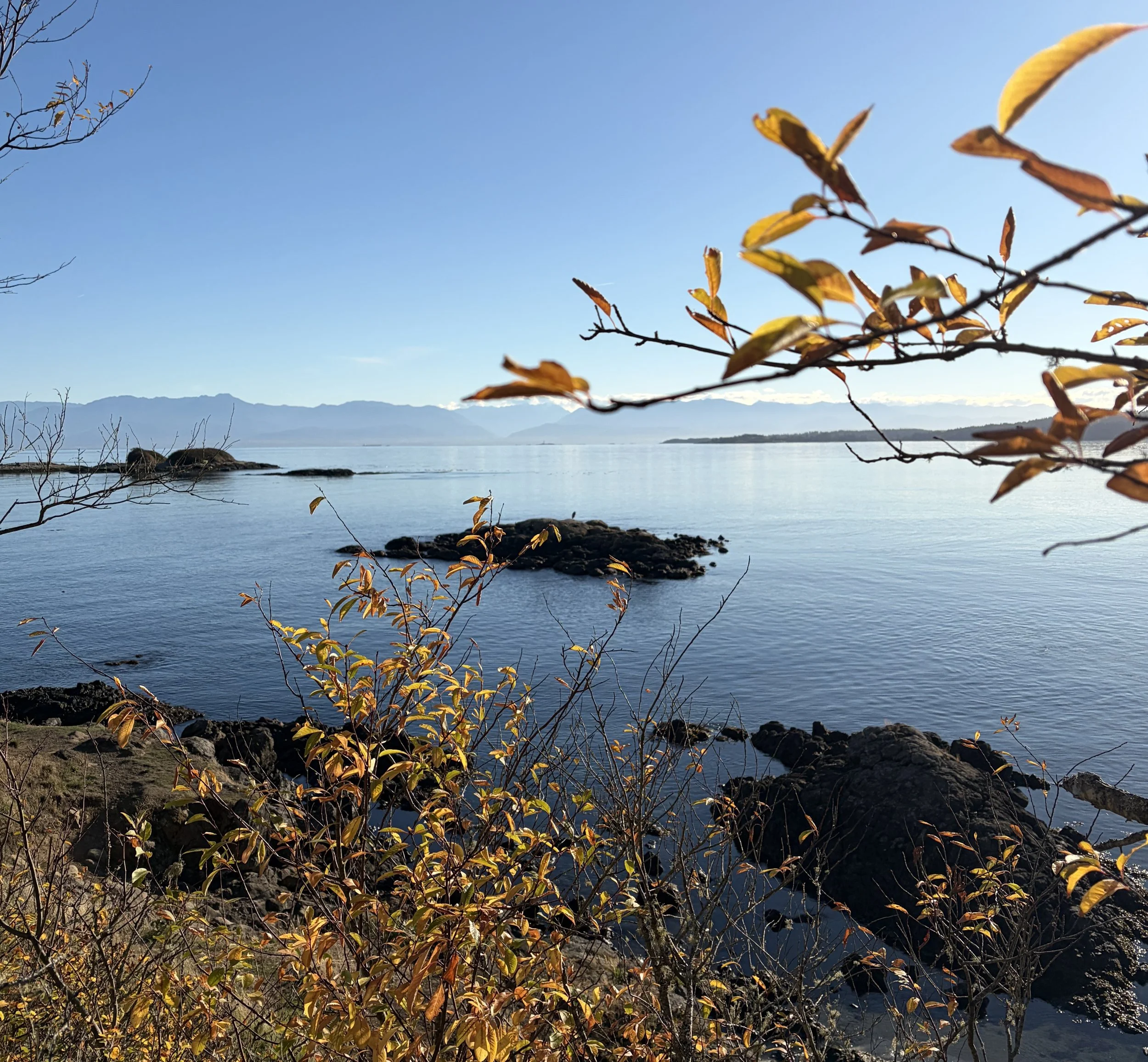
Each time I walk the forest pathways that lead to the sea, I am gifted with such peace. I feel myself exhale, my shoulders drop, and my mind settle. I don't even want much conversation; I just want all my senses to be alert to what is there for me to take in.
After the first few minutes, I can feel the relief of being where I belong—not on a screen, but in the real world of fragrant scents, warm light, and birdsong. The beginning and end of the day are particularly sweet for the quality of light and the quietude they offer.
As I walk, I notice my thoughts often turn to painting. It's connected to the feeling that I have here—open, spacious, curious, inspired. I want that same feeling when I am in my studio, engaging with the nature of creativity.
I want to notice everything and let myself be swept up in the wonderment of what art is and can be. But so often I rush in, bringing with me all the noise of the day and the anticipation of outcome. My mind is not settled. I'm not yet ready to make work—so why do I even attempt to dive in when I am in that state? Perhaps it is the economy of time pulling at me. I've got to make the most of what is available—that's what my inner taskmaster is saying, anyway.
I think forest therapy helps me to know what being truly present feels like. I like that I can hold that in my mind's eye, letting it linger. I take pictures as visual reminders of those moments, and when I look at them, I can immediately feel the peace settle into me once again.
It is often said that the brain doesn't know the difference between a real experience and an imagined one—which is why our thoughts are so powerful, and why mindfulness helps us to notice the quality of those thoughts so we can be more intentional with them.
Visualizations work simply because the brain accepts them as real experiences. Athletes and performers know this very well, as they cycle through their event or practice repeatedly in their visualizations. They imagine the muscles firing, the course they'll follow, and all that needs to happen to reach their goal.
What is our goal in art-making? What are we reaching toward when we enter the studio, ready to work?
For me, it is not about the successful outcome of a piece but about a desire for a mindset that allows me to experience the creative process with trust and a willingness to follow.
My goal is to be in a state where art-making is possible, and outcomes are measured by the quality of my engagement. And, most importantly, I want peace and presence in the process—much like I experience when I walk the forest trails.
Taking a moment upon entering the studio to visualize a peaceful place where our minds and bodies have felt at ease allows us to re-experience the awe of light, colour, movement, and sound and bring that into the present moment. Ideally, we want to be working from this energy, rather than the static that often clings to us from our busy days and personal challenges.
Many years ago, when resistance to making my work loomed large for me, I began devoting the first 15 minutes of my studio time to transitioning into the right mindset for making my art. I still do. These transition rituals are simple actions that I repeat every time I enter the studio—personal actions that quiet my mind and settle my energy.
Looking at my forest pictures, sitting quietly with my eyes closed, diffusing some essential oils, making a cup of tea, and playing music are just a few of the actions I have found really aid my mind in making that transition to being more present and ready for my creative work.
Perhaps you have a place you like to go that offers you the same experience. The next time you go there, really notice the qualities that make it possible for you—what sounds, fragrances, and sights are most settling for you?
Capture those moments in pictures or videos for later, and as you do, notice just how much more you're noticing. That is you becoming more in tune with where you are—becoming even more present and aware.
Carry these impressions with you. Soak them in deeply. They will make up part of your visualization later, as you revisit these places in your imagination.
Notice, too, how your body and nervous system feel when you're in your peaceful place. Are you relaxed and open? How do you feel that in your body—what is your heart rate doing, your shoulders, your jaw?
For me, that place is the forest. My walks are the sensory memory I tune into and invite my imagination to experience in as much detail as possible. For you, it might be somewhere different, a place that awakens your senses and holds you safely in the present moment. A few quiet moments spent envisioning it at the start of your studio practice will settle you and bring you into a state from which creativity thrives.
Whatever that place is for you, hold it close in your mind and heart and let it be a part of your studio mindset reset practice. You'll likely be surprised by how effective it is at bringing you home to what nourishes your creative soul.